
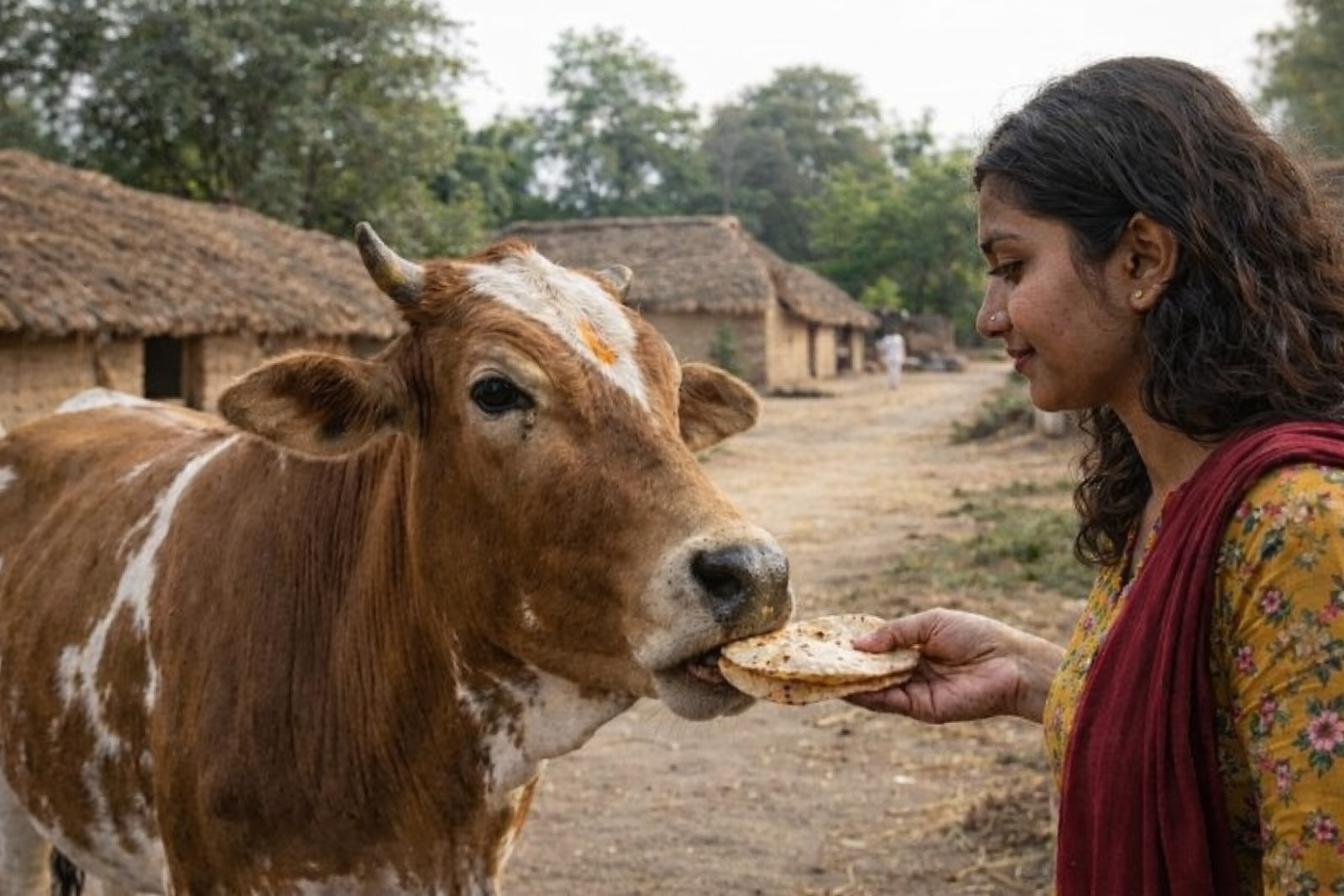
In India, the tradition of offering the first roti of the day to a cow has been followed for centuries. While it is deeply rooted in religious belief, modern science also considers this practice beneficial. According to studies, feeding cows fresh, homemade roti improves their overall health, strengthens digestion, and boosts immunity. However, it is important to avoid adding salt or oil while feeding rotis to cows.
A Centuries-Old Indian Tradition
In millions of Indian households, setting aside the first roti every morning for a cow is a long-standing custom. This practice is not merely a ritual but a way of expressing gratitude toward Gaumata, who is regarded as a symbol of purity, nourishment, and life.
In today’s scientific age, many people question whether feeding rotis to cows is actually safe and beneficial. Interestingly, scientific research now supports what tradition has followed for generations.
What Science Says About Feeding the First Roti to Cows
A study published in Frontiers in Veterinary Science highlights that when cows are fed fresh homemade rotis or fodder instead of scavenging roadside waste, their health improves significantly. Clean and nutritious food enhances cows’ gut health, improves milk quality, and strengthens their immune system.
This shows that the age-old tradition not only preserves cultural values but also contributes to animal welfare from a scientific perspective.
Religious and Cultural Importance of Gau Seva
The practice of feeding cows is known as Gau Seva. In Hindu scriptures such as the Atharvaveda and Bhagavata Purana, feeding cows is considered a righteous act and a way of showing compassion toward all living beings.
Historically, families depended on cows for milk, farming, and fuel. Therefore, feeding cows was both a spiritual and practical act. Even today, the tradition reflects kindness, sustainability, and harmony with nature.
Relevance of the Tradition in Modern Times
In urban areas, this practice has evolved beyond religious duty and is now seen as an act of empathy and social responsibility.
- Prevention of Malnutrition: Animal welfare groups believe that providing clean and nutritious food reduces hunger and malnutrition among urban cows.
- Food Over Money: Many gaushalas now encourage donating rotis or fodder instead of cash, ensuring cows receive direct nutritional support.
Scientific Benefits of Feeding Rotis to Cows
From a biological standpoint, cows are ruminant animals that require fiber-rich food for healthy digestion.
- Healthy Diet: Plain wheat rotis and green fodder support proper digestion.
- Avoid Harmful Foods: Salt, oil, spices, or food served in plastic bags can harm cows.
- Improved Health: Studies suggest cows fed clean, homemade food suffer fewer digestive issues and diseases.
Environmental Benefits of Responsible Cow Feeding
Feeding cows properly also helps maintain environmental cleanliness:
- Less Garbage Consumption: Well-fed cows avoid eating plastic and harmful waste from garbage dumps.
- Cleaner Surroundings: This reduces urban litter and prevents fatal stomach diseases in cows.
- Useful Cow Dung: Healthy cows produce dung that serves as excellent organic fertilizer and eco-friendly fuel.
Important Tips While Feeding the First Roti to a Cow
If you follow this practice, keep these points in mind:
- Always feed plain rotis without salt, oil, or ghee.
- Avoid feeding cows on busy roads to prevent accidents.
- Prefer donating rotis to local gaushalas or organized roti drives.
A simple roti offered with care not only nourishes a cow but also brings peace to the human soul. This tradition strengthens the bond between humans, animals, and nature—proving that faith and science can go hand in hand.